Concept and composition by Ida Hiršenfelder (beepblip)
Curators: Pia Brezavšček and Jasmina Založnik
Adviser: Urška Savič
Atmospheric data: Slovenian Environment Agency (ARSO)
Sound technician: Grega Mohorčič, Samo Dernovšek, Brina Ivanetič
Production: City of Women
Producer: Eva Prodan
Assistant producers: Manca Cerar, Uma Leona Flisar, Brina Kavčič
Co-production: Glej Theatre (Barbara Zonta)
Special thanks to the people, seeds, and other entities who informed and enabled the production of this work, especially Krater Collective for conversations, space, plants, mosquitoes, millipedes and birds, and specifically Shelter for discarded plants for space, also to Bob Institute / Livada Biotop for advice. For support and conversations, sincere gratitude to Andrej Koruza, Anamari Hrup, Eva Jeri Hanžek, Urban Belina, and Ana Lokovšek.
Venue: Glej Theatre
Spring: 19 September 2026, 19:00–22:00
Summer: 20 September 2026, 19:00–22:00
Tickets: link to ticket purchase (max 50 beds)
[…] plants do much more than just perceive and react. Plants communicate amongst themselves and with animals. Plants do so in many ways, both above and below ground; a growing body of research shows that plants can even detect and emit sounds.
— Filippo Del Stabile,Vittoria Marsili, Luca Forti and Laura Arru, Is There a Role for Sound in Plants? Plants 2022, 11(18), 2391
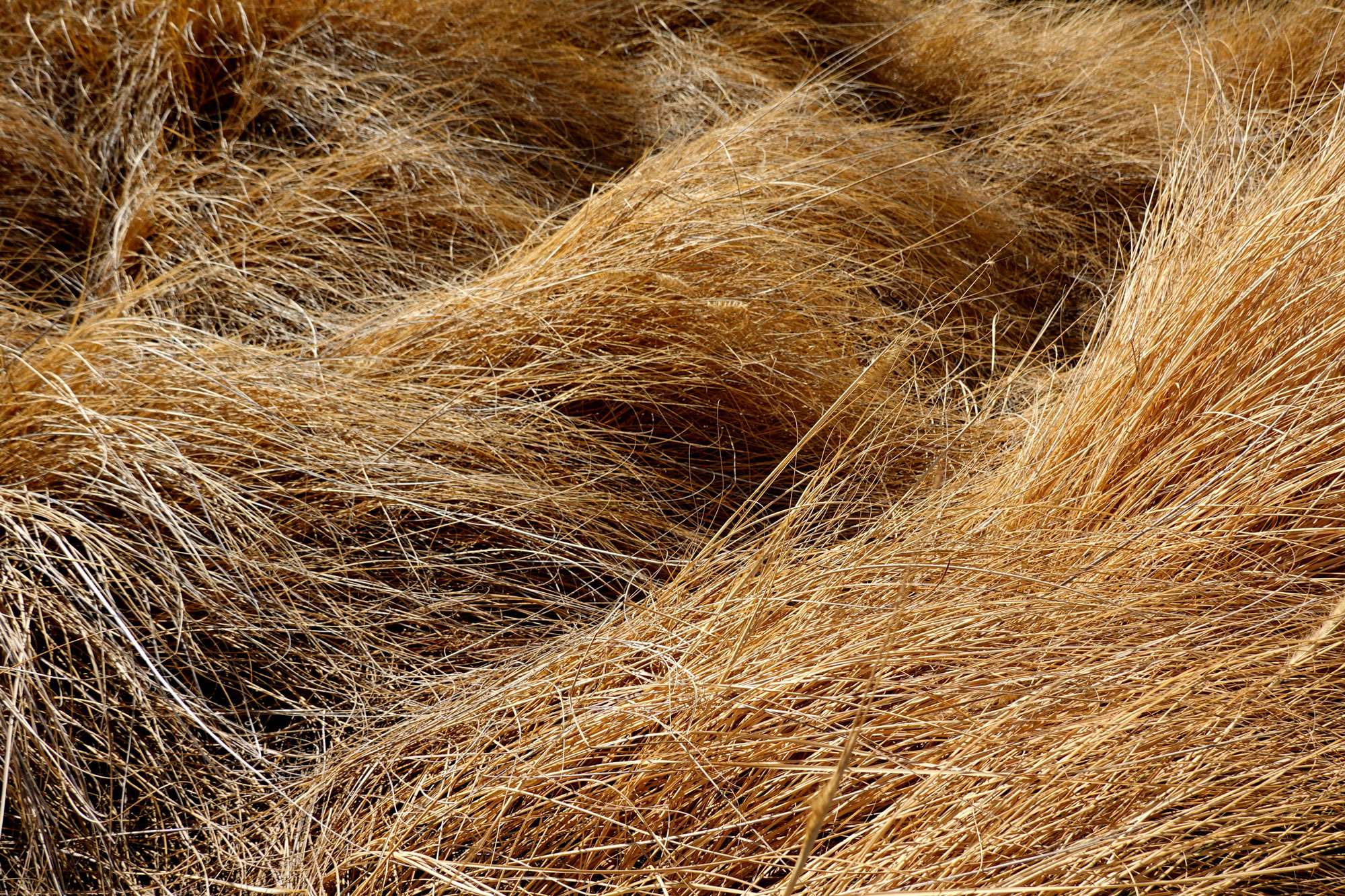
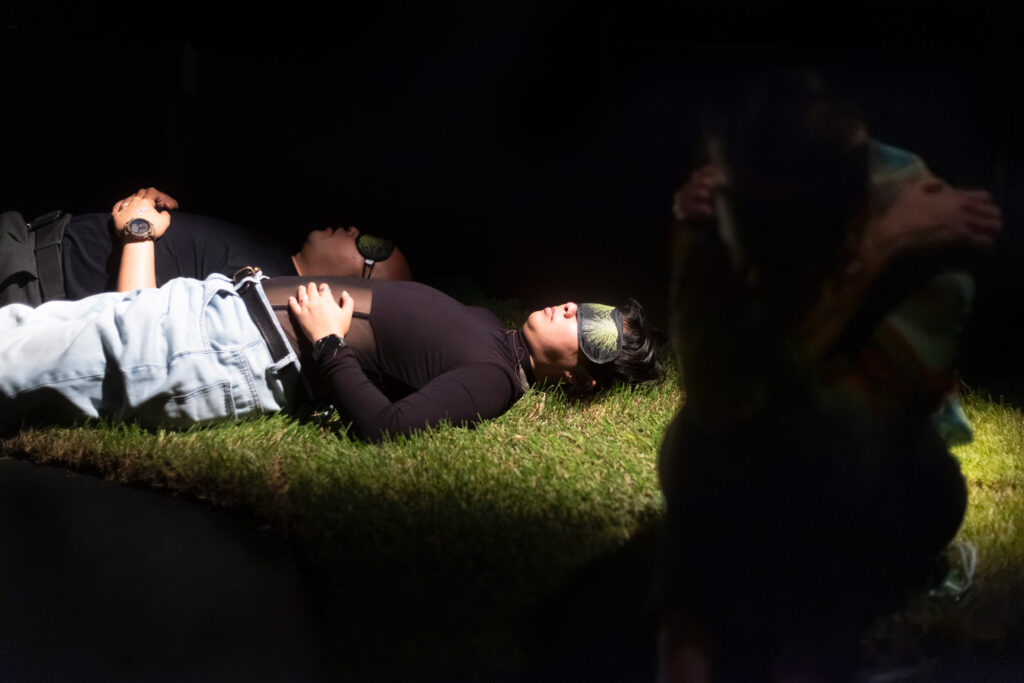
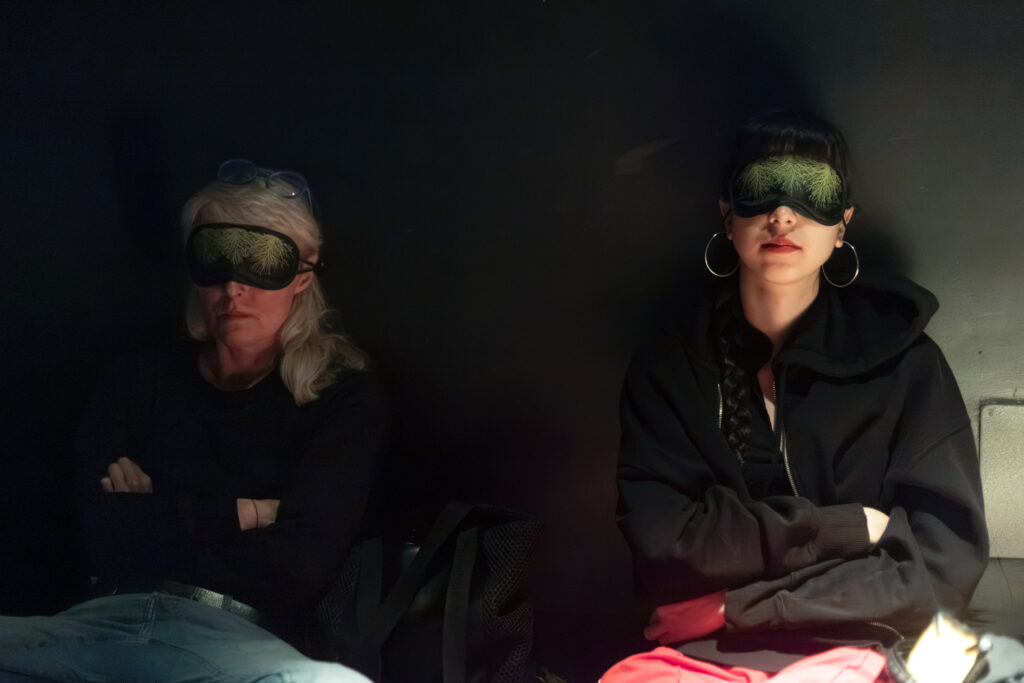
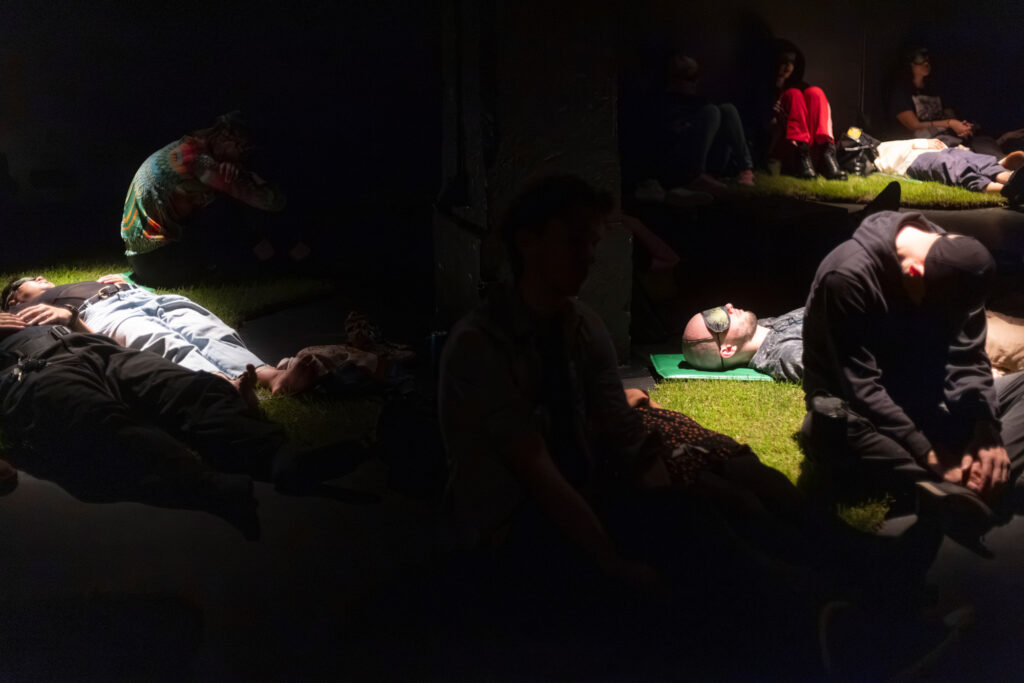
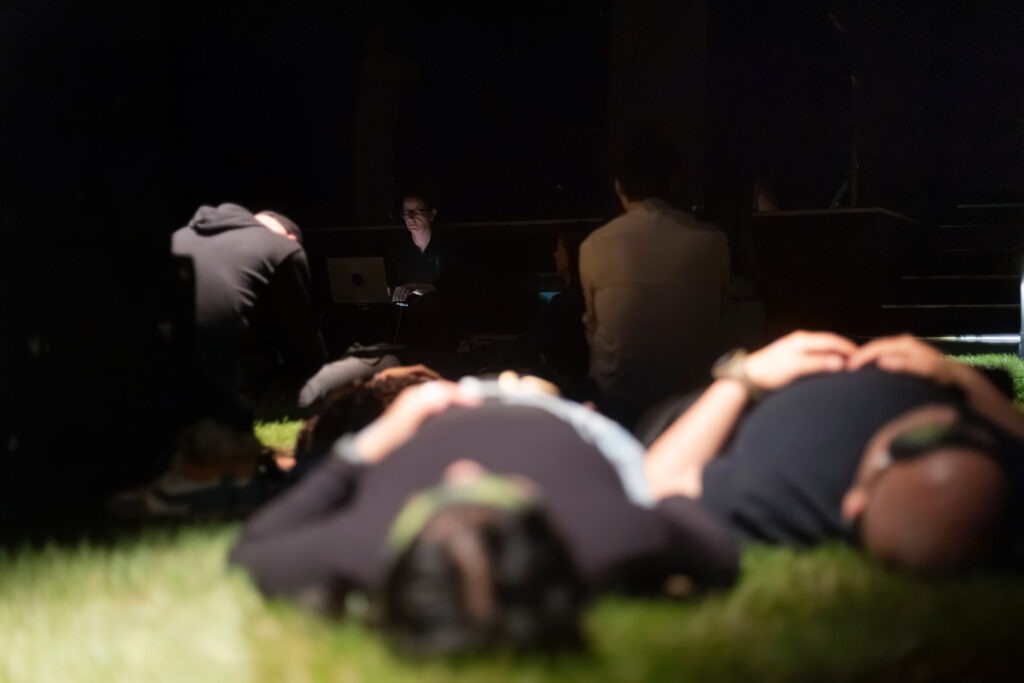
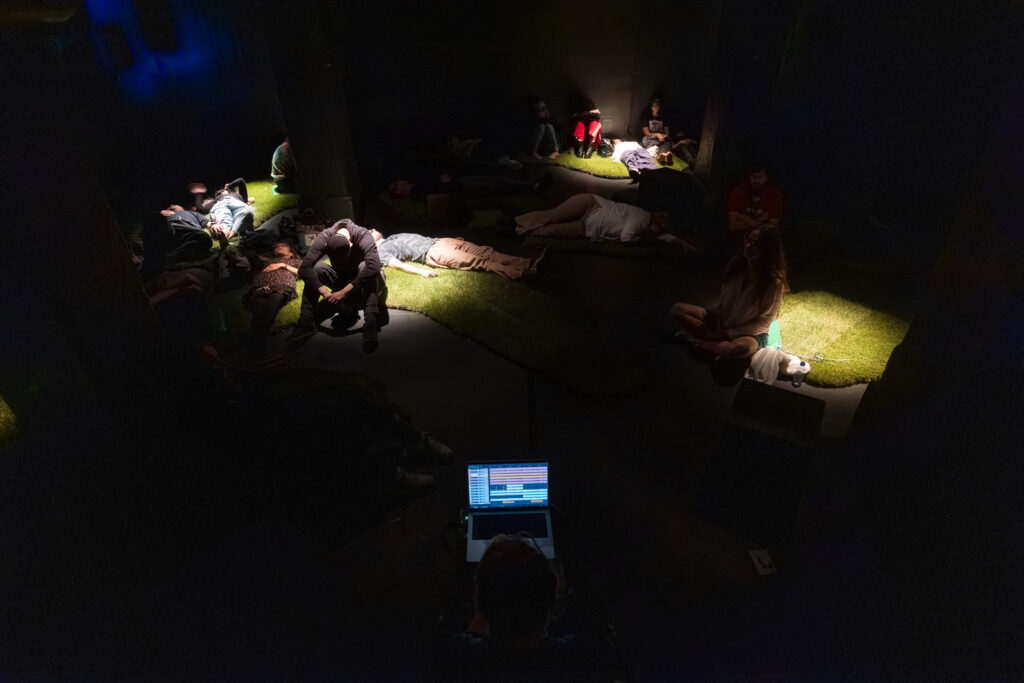
I Listening to the Grass Grow is an invitation to spend time unproductively by entering into the plant-based perception of two seasons: spring and summer. The listening experience lasts far longer than conventional concert formats allow. It encompasses boredom and repetition, yet also constant change, the pulsing of day and night, alongside sudden and fluctuating environmental shifts. An octaphonic setup entangles sonified data, condensing a full month into a single hour. Air pressure determines the sound frequency; temperature dictates amplitude; relative humidity shapes the melody; and wind speed data generates low-frequency vibrations, with wind direction controlling the swirling motion and spatial movement of sound across the speakers. Experiments with cultivation of wheatgrass during the catastrophic drought at Krater this year informed the emphasis on precipitation data, global warming, and ultraviolet radiation; these factors enter the soundscape not merely as environmental elements, but as the very forces causing the plants to wither. Some plants begin to feel the effects of drought just fifteen days after the fallout of any significant rainfall. The initial plan to cultivate, monitor, and tend to the wheatgrass at Krater proved impossible due to the grass drying out, and also unethical due to the microclimatic privilege that a monoculture of grass would enjoy at the expense of the parched ecosystem. This year, autumn crept into Krater early. Acacia leaves began turning yellow and falling off as early as June, and by September, the trees were completely bare.
Plants communicate with their environment both underground and above ground. While signalling via symbiotic mycorrhizal networks and volatile organic compounds has long been known, sound perception (plant acoustics) and communication (plant bioacoustics) are fields where reliable scientific evidence has only emerged in the last decade. Exactly fifty years ago, Mort Garson released the electronic album Mother Earth’s Plantasia in a limited edition, capturing the spirit of hippies who sought to connect sonically with the seemingly inert yet life-sustaining world of plants. Decades later, numerous scientific experiments have demonstrated that various plants respond to sound, within their own perceptual spectrums, in distinct ways. Certain plant fruits exhibit reduced deformation of plant cell membranes when exposed to sounds of up to 1,000 Hz. Some plants grow fastest at frequencies between 200 and 500 Hz, while for others, frequencies around 2,000 Hz inhibit growth. Some even show physiological changes in the (beyond human hearing) ultrasonic range above 20 kHz. Naturally, plants do not merely perceive frequencies; they distinguish sound qualities and respond quite differently to recognised sounds, such as those produced by pollinators. It has been proven that rice seedlings recognise the sound of rain; they do not simply respond to the physical vibration of rainfall but actually hear it, as they grow faster when exposed to the sound of rain alone, without any physical contact with water.
We are learning more and more about the sensory world of plants, primarily thanks to research on agricultural species such as rice, cereal grasses, maize, and tomatoes, crops whose genetics have been most extensively studied due to the drive to optimise their cultivation. Economic and political interests play a role in this scientific field. In the area of plant bioacoustics, the most prominent research comes from a team at Tel Aviv University; this work benefits from significant financial support from the local agricultural sector and is the product of complex political dynamics. This context inevitably shapes our understanding of how plants signal via airborne sound. Plant sound emission is associated with cavitation, a mechanical rupture of the water column within the xylem vessel, which is triggered by stress. Cutting a plant is generally a form of positive stress that strengthens its resilience, much like human athletes build strength through minor muscle injuries. Drought, however, is a stressor to which plants can adapt only to a limited extent and for a limited duration. They emit sounds far less frequently when cut than when exposed to drought. What we will listen to is the accumulation of cavitation events during prolonged periods of drought.
The phrase Listening to the Grass Grow is a call to exist without friction, in a state of wu-wei. Above all, it is an invitation to pay attention to what usually goes unheard. It is also an invitation to a time of regeneration, not the kind where grass becomes “wellness food,” but one that values the intrinsic value of the grassy realm of perception, independent of its utility. It suffices that the grass is part of a complex ecosystem in which every entity, living or non-living, plays a role in supporting life and composting. The grass on which the audience will lie during the two-day concert will later take root in the Shelter for Abandoned Plants and become part of the Krater’s ecosystem; meanwhile, the intertwined root sprouts of the cereal grass, used for light signalling in the venue, will nourish Krater’s compost heap.

beepblip (Ida Hiršenfelder) is a sound artist and archivist making psychogeographical spatial compositions and multi-sensory experiences. She primarily works in sound ecology and spatialisation, addressing themes such as the agency of non-organic others, non-human animal languages, and listening to the inaudible. She has exhibited sound installations at group shows in museums such as MG+MSUM (2013, 2024, 2025), MSU Zagreb (2019), ZKM Karlsruhe (2022), Kunsthaus Graz (2025), and Cité Internationale des Arts Paris (2026). Her compositions and installations have been presented at various festivals, including Ars Electronica, Linz (2016), Device Art, Zagreb (2019), OTTOsonics, Ottensheim (2022), Wave Field Synthesis, The Hague (2022, 2023), Motions | An Experimental Sound Event, Zagreb (2023), Experimance, Saarbrücken (2024), TO)pot Festival of Radical Walking, Ljubljana (2024, 2026), and Lighting Guerrilla, Ljubljana (2025).